For much of the past year, the discourse about AI video has been dominated by the "spectacle" phase—a cycle of hazy technical demos, viral memes, and experimental movies that hinted at potential but failed to provide a solid commercial case. That era of uniqueness is officially passed.
Kling AI, a part of the Chinese social media behemoth Kuaishou, recently received financial pledges totaling approximately RMB 19.05 billion (roughly 2.79 billion) at a pre-money valuation of 15 billion. If the total permissible financing achieves its 3 billion limit, the estimated post-money valuation will increase to 18 billion. This move, the largest of its kind in the generative video sector, demonstrates the technology's basic development. AI video has evolved from an experimental feature to an independent, revenue-generating software sector with the financial resources to shake the foundations of traditional media production.
1. The End of the "Feature" Era
The structural restructuring of Kling is a fundamental component of this agreement. Kuaishou is methodically isolating its Kling AI operations into a separate legal business, complete with its own governance, financial identity, and, most importantly, a dedicated staff equity structure.
Kuaishou's decision to spin off Kling establishes AI video as a "standalone business category" rather than just a utility for its short-video app. From a strategic standpoint, this separate equity structure is a defensive need; it offers the leadership incentives needed to avoid talent "brain drain" to aggressive competitors in the AI space. It represents a shift toward enterprise-grade procurement, taking the platform away from its roots as a tool for casual social media makers.
2. The Most Unlikely Cap Table in Technology
Perhaps the most illuminating aspect of this transaction is the list of backers. Alibaba, Tencent, and Baidu are among the investors, and these conglomerates frequently compete with Kuaishou in cloud services, advertising, and entertainment.
This is a clever hedge strategy. By supporting a competitor's spin-off, these IT behemoths are effectively purchasing insurance against their own internal AI advancements. Their involvement focuses on four strategic motivations:
- Cloud Demand: Video production is computationally intensive. As a successful platform, Kling will require vast amounts of storage, networking, and accelerator capacity, favoring cloud providers regardless of who controls the end-user product.
- Model Diversity: Modern AI platforms are adopting multi-model capabilities. Investors want equity in a rapidly developing model supplier so they are not tied to a single proprietary system.
- Advertising Dominance: Lowering the barrier to video creation increases the number of merchants capable of producing high-quality product demos, hence supporting the larger digital advertising ecosystem.
- Financial Exposure: Creating foundation models is extremely expensive. This investment enables competitors to obtain financial exposure to Kling's growth without having to recreate its product and creative ecosystem from scratch.
The investor list is one of the most illuminating aspects of the acquisition... Alibaba, Tencent, and Baidu all have their own AI, cloud, advertising, entertainment, or content platforms... but they all decided to invest in Kling."
3. Real Revenue in an Era of Hype
Many AI businesses are valued based on "vibes" and distant possibilities, but Kling provides real financial facts. Kuaishou said that Kling produced over RMB 650 million in revenue in the first quarter of 2026, representing a year-over-year growth rate of more than 300%. By March 2026, its annualized revenue run rate had reached almost $500 million.
Kling's pre-money valuation is $15 billion, or about 30 times annualized revenue. To put this into context, classic SaaS companies often trade at multiples of 5x to 10x. This premium is a significant bet on future growth, demonstrating that investors no longer see AI video as a "cash-burning" activity but rather as a high-growth software sector with quickly increasing recurring revenue.
https://www.youtube.com/watch?v=0B_xyflXrwc
4. Professionalism and the "House of David" benchmark
Kling is aggressively pursuing professional workflows to support its valuation. By the end of 2025, the platform had reported serving over 30,000 enterprise customers. Notably, Kuaishou alleges that Kling supplied visual effects shots to the television series House of David.
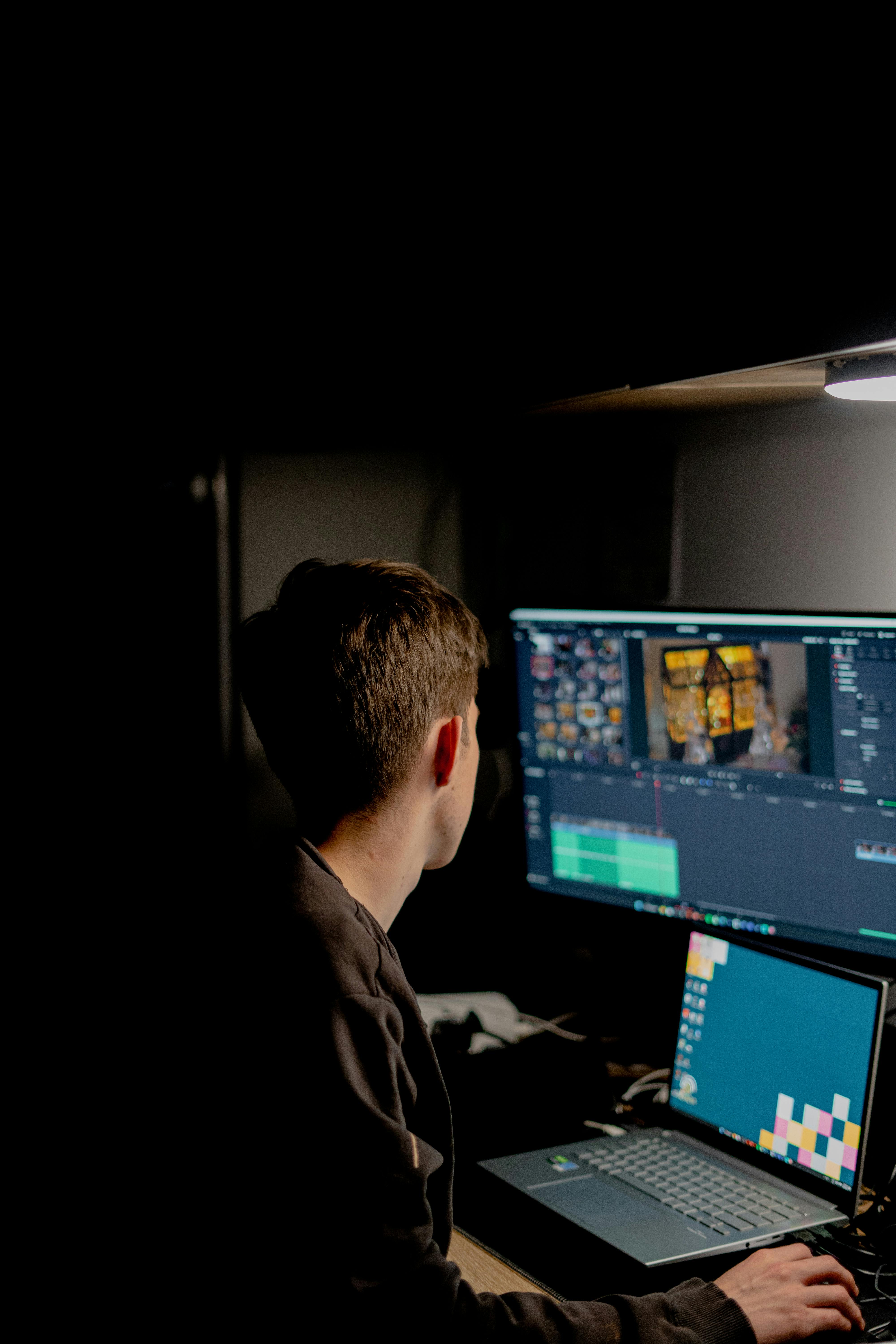 While this is a big "company-reported milestone," a savvy analyst should approach such benchmarks with caution until independently verified; yet, it establishes the tool as a viable asset for film and television production.
To complement this professional transition, Kling has focused features designed for reliable economics over mere visual flair:
- Character and Subject Consistency: To avoid "hallucinated" morphing between shots.
- Camera and Motion Control: Offering filmmakers precise cinematic toolsets.
- API-Based Workflows: Enables deep integration with existing studio pipelines.
- Team Collaboration: Streamlining multi-user project management for large organizations.
The industry benchmark has moved. Realistic movement is now the norm; professional-level dependability is the new criterion for survival.
5. "Boring" features are now the most important.
The competitive edge in AI video has changed from the fantastical to the "boring": commercial usage rights and predictable production costs. Kling's paid-service terms now expressly allow members to disseminate created output for commercial purposes. For brands and agencies, these legal safeguards are significantly more important than the model's raw creative capacity.
For advertisers analyzing the AI video landscape, this deal illustrates six crucial platform decision criteria:
1. Total Production Cost: Includes failed generations, revisions, and upscaling.
2. Workflow Control: The ability to edit certain scenes without regenerating the entire video.
3. Rights and Restrictions: Clearly defined business permits and intellectual property safeguards.
4. Portability: Can assets and prompts be moved between providers to avoid vendor lock-in?
5. Reliability: Stable APIs and predictable rendering queues for short deadlines.
6. Disclosure Requirements: Tools for identifying synthetic content and ensuring regulatory compliance.
Conclusion: The Five-Year Countdown
The tremendous influx of finance into Kling comes with tight conditions. If Kling fails to conduct an initial public offering (IPO) before October 30, 2031, investors will be entitled to redemption rights under the shareholder agreement.
This establishes a five-year deadline for Kling to demonstrate that it can withstand the simultaneous stresses of high computational costs and the eventual commoditization of AI models. The challenge is enormous: Kling must go from a high-growth subsidiary to a sustainable SaaS behemoth while sustaining a value that now requires perfection.
As professional-grade video production becomes more accessible, we face a potential disruption: how will traditional media production houses, whose business models are based on high labor costs and complex visual effects, adapt when those same outputs are reduced to the cost of a software subscription?
Comments on “The AI Video Gold Rush: What Kling AI’s $15 Billion Valuation”